Co-designing and applying biogeochemical models to inform mCDR validation and ecosystem impacts
This research is strengthening our capacity to predict how potential mCDR projects may affect ocean nitrogen cycling, with implications for nutrient dynamics, water quality, and greenhouse gas feedbacks.
Key outputs and initiatives:
- Develop a new nitrogen cycle model to integrate into the open-source Oceananigans–OceanBioME modeling framework.
- Quantify potential positive and negative impacts on nutrients’ dynamics, such as water quality and greenhouse gas emissions, during simulations of ocean alkalinity enhancement within the Bedford Basin.
- Collaborate with the other CONVERGE mCDR Science HQP to pair biogeochemical modelling outputs with ecosystem-based modelling to assess potential cascading effects of altered nutrient dynamics during OAE on the food web and high-trophic levels.
- Through workshops led by the CONVERGE mCDR Engagement HQP, co-design mCDR model scenarios with Indigenous communities to assess potential impacts of mCDR related to their priorities.
Dr. Carolyn “Carly” Buchwald is an associate professor and Canada Research Chair in Ocean Chemistry in the Department of Oceanography at Dalhousie University. Her research program is centred on nitrogen cycling and microbial biogeochemistry in the ocean, using stable isotopes to understand how nutrients are transformed in marine systems. Building on this foundation, her current work focuses on marine carbon dioxide removal (mCDR), examining how ocean-based climate solutions such as ocean alkalinity enhancement and seaweed aquaculture interact with natural carbon and nitrogen cycles. Dr. Buchwald’s research integrates field studies, experiments, and isotope techniques to evaluate the effectiveness and environmental impact of emerging mCDR approaches.
Dr. Kalina Grabb is a chemical oceanographer who enjoys conducting science that is informed by policy and local community priorities, including fishing and Indigenous communities. She currently is a postdoctoral fellow at Dalhousie University in Halifax, Canada, where she is the research lead of the Ocean Frontier Institute’s CONVERGE mCDR program. Dr. Grabb’s research has spanned sensor development, nutrient cycling, reactive chemicals, and marine carbon dioxide removal. She completed her PhD in 2022 in chemical oceanography at MIT-Woods Hole Oceanographic Institution (WHOI) and has worked across the science-policy interface at the U.S. National Oceanic and Atmospheric Administration’s (NOAA) Ocean Acidification Program, WHOI Marine Policy Center, and NOAA Northeast Fisheries Science Center. Dr. Grabb grew up in the landlocked state of Colorado and, in her free time, enjoys studying oceanographic phenomena through sailing, diving, kiting, and long swims at the beach.
Modelling how mCDR-related changes in ocean biogeochemistry can impact marine food webs
Marine food-web models will be used to assess higher-order ecological risks and co-benefits of mCDR. This project is conducting exploratory scenarios and targeted case studies to inform about thresholds of changes in bottom-up forcing that could significantly alter trophic transfer efficiencies, fish, and fisheries. Efforts will initially focus on ocean alkalinity enhancement applications on the Scotian Shelf.
Key outputs and initiatives:
- Adapt existing regional food-web models such that they are fit-for-purpose for mCDR exploratory scenarios.
- Design and conduct a suite of strategic simulations to explore how mCDR-related changes in water chemistry and lower trophic levels may impact trophic transfer efficiencies, fish biomass, and fisheries.
- Identify critical knowledge gaps related to ecosystem and fisheries impacts of mCDR to direct future field and lab studies.
- Provide recommendations for future modelling investigations focused on mCDR projections of ecological impacts.
Dr. Wendy Gentleman’s research involves developing and applying mechanistic models to investigate how changing climate and human activities can impact marine populations and ecosystems, identify critical knowledge gaps, and assess uncertainty.
Dr. Tyler Eddy is a research scientist at the Fisheries & Marine Institute, Memorial University. Dr. Eddy is interested in past, present, and future human interactions with, and ecology of, marine ecosystems. He and his team use ecosystem modelling approaches to understand the impacts of fishing, climate change, and mCDR on marine ecosystems. Dr. Eddy is a founding coordinator of the Fisheries and Marine Ecosystem Model Intercomparison Project (FishMIP), a steering committee member of the Biodiversity and Ecosystem Services Scenario-based Inter-Model Comparison (BES-SIM), and a section editor of PLOS Ecosystems.
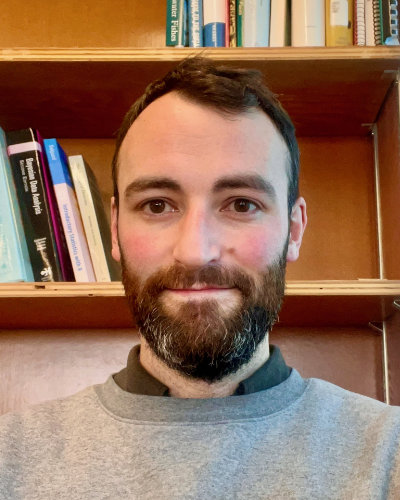
Dr. Liam MacNeil is a marine ecologist interested in the distribution and dynamics of marine life. He is a postdoctoral fellow at Dalhousie University, focused on modelling foodweb dynamics across the Scotian Shelf under scenarios of mCDR as part of the Transforming Climate Action research program. Dr. MacNeil has led and contributed to a variety of interdisciplinary research efforts linking fundamental biology with aspects of biogeochemistry, ecological and evolutionary theory, and modern tools for scientific data collection and analyses. He is also a part-time instructor for introductory science and for scientific programming in the biology department at Dalhousie.
Identifying marine carbon dioxide removal potential through Indigenous perspectives
Support reconciliation priorities and mCDR approaches toward legal and social licence in ethical and sustainable ways through engagement with First Nation communities and organizations across the Wabanaki Territory.
Key outputs and initiatives:
- Community-facing communication materials related to the science of mCDR (adapted with feedback from facilitated discussions).
- Community-facing report summarizing the findings from research.
- Community-specific mCDR pathway considerations based on facilitated discussions.
Dr. Megan Bailey is a professor in the Marine Affairs Program at Dalhousie University. Dr. Bailey’s research is motivated by notions of equity and fairness, and a belief that the way humans use the ocean, and the resources within, should be governed in ways that ensure ecological resilience and social well-being. Her work is transdisciplinary and partnership-led, with many of her projects relating to fisheries allocation and access and working to understand how governance can support more just distribution of benefits.
Ken Paul is a member of the Wolastoqey Nation of Neqotkuk. For nearly two decades, he has advocated for First Nations Chiefs regionally, nationally and internationally on issues related to fisheries, aquaculture, oceans governance, and aquatic resources as they relate to inherent and treaty rights, legislation, and policy. Paul has worked within the international mCDR community and has been actively involved in increasing mCDR literacy and engagement within Indigenous communities.
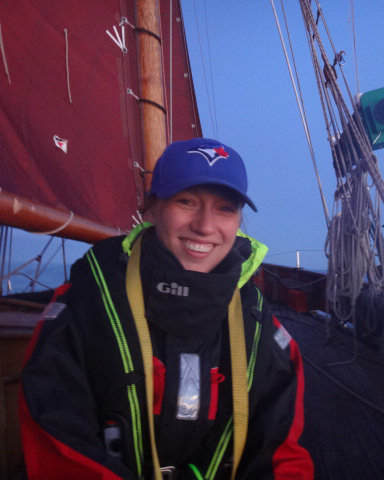
Dr. Emmanuelle Cook is a postdoctoral researcher working with Dr. Megan Bailey and Ken Paul on a project identifying mCDR potential through Indigenous perspectives. Through her graduate work, Dr. Cook realized the climate crisis is a powerful driving force in scientific research. She believes that finding sustainable solutions to this crisis requires more than scientific ingenuity and includes a societal shift in how we consume resources and connect with nature. Dr. Cook is interested in working in transdisciplinary spaces and engaging in collaborative research projects that include many different perspectives, where she can combine her knowledge and experience gained through engineering and oceanography to help create solutions for ocean environmental protection and sustainability.
Dr. Cook completed a PhD in oceanography at Dalhousie University, where her research focused on studying the effect of sea ice cover on underwater ambient noise in northern coastal regions. Her PhD work included exploring different research approaches rooted in prioritizing knowledge-sharing and collaborating with local communities in Nunatsiavut.
Legal and policy pathways for responsible marine carbon dioxide removal in Canada
This project examines the legal, governance, and policy conditions for responsible mCDR research and potential scale-up in Canada. It maps relevant international and Canadian legal frameworks, including ocean governance, environmental assessment, climate governance, public participation, Indigenous rights, human rights, liability, and monitoring obligations. The project aims to identify governance pathways that can support transparent, accountable, and participatory decision-making, while ensuring that emerging mCDR research and innovation remain attentive to environmental protection, social equity, and institutional responsibility.
Key outputs and initiatives:
- Map international and Canadian legal and policy frameworks relevant to mCDR research and potential scale-up.
- Identify governance gaps and decision points related to environmental assessment, permitting, monitoring, liability, public participation, and Indigenous rights.
- Develop policy briefs, legal memoranda, and peer-reviewed research outputs to support responsible and equitable mCDR governance.
- Contribute to CONVERGE mCDR’s interdisciplinary work by integrating legal and policy analysis with science and data, engagement, and economics streams.
- Support knowledge mobilization, partner engagement, and future research proposal development.
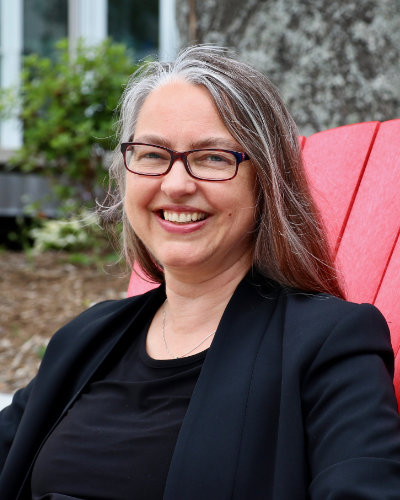
Dr. Sara Seck’s research and teaching interests interrogate the intersection of human rights and environmental law across international, transnational, domestic, and local contexts, including in relation to the marine environment. Since 2022, Dr. Seck has been a co-editor of the Ocean Yearbook.
Dr. Neil Craik is a professor at the University of Waterloo, with appointments in the School of Environment, Enterprise and Development and the Balsillie School of International Affairs. His research focuses on international and Canadian environmental law, with particular expertise in climate and geoengineering governance, environmental impact assessment, and the governance of global commons such as the oceans and atmosphere.
Dr. Gustavo Leite Neves da Luz is a postdoctoral fellow at Dalhousie University's Schulich School of Law and a CONVERGE HQP with the CONVERGE mCDR program. He holds a PhD in international law from the University of Hamburg. His research focuses on law of the sea, international environmental law, and ocean governance. He has worked with the University of Hamburg's TestArtUp CDRmare project.
Co-creating equitable mCDR pathways through Free, Prior, and Informed Consent (FPIC) with Mi'kmaq Communities in Nova Scotia
This project examines how mCDR initiatives can be developed responsibly and equitably through Indigenous-led governance and economic participation. Using the principles of Free, Prior, and Informed Consent (FPIC) and a Two-Eyed Seeing approach, the research will co-develop Community Economic Benefit Agreement (CEBA) frameworks, governance models, and ownership structures with Mi'kmaq communities and industry partners. The project aims to identify pathways for meaningful economic participation, benefit-sharing, and decision-making, while supporting the responsible development of Canada's emerging blue economy.
Key outputs and initiatives:
- Develop an economic value chain for local mCDR projects, identifying opportunities for Indigenous participation and community benefits.
- Co-create community engagement guidelines to support FPIC-based decision-making for emerging ocean industries.
- Design and evaluate Community Economic Benefit Agreement (CEBA) frameworks that incorporate Indigenous rights, equity participation, revenue sharing, and shared governance.
- Produce policy recommendations, implementation pilots, and peer-reviewed publications to inform responsible mCDR development and broader Indigenous-led climate governance.
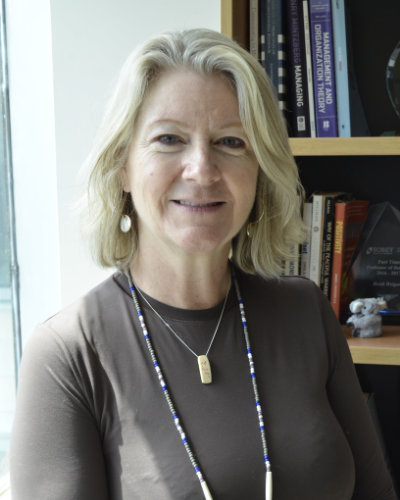
Dr. Heidi Weigand is an associate professor in the Department of Leadership and Organizations at Dalhousie University. Her research focuses on collaborative governance, Indigenous–settler partnerships, and leadership approaches that support equitable decision-making in complex environmental and public policy contexts. Working alongside Indigenous communities, governments, and industry partners, she develops governance frameworks that integrate Two-Eyed Seeing, Free, Prior, and Informed Consent (FPIC), and community-centred approaches to support responsible and inclusive transitions within the blue economy.
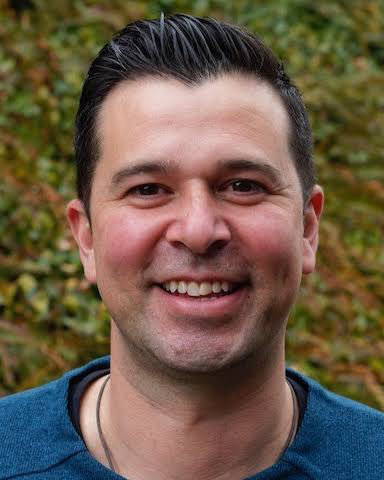
Dr. Andrés Cisneros-Montemayor is an associate professor in the School of Resource and Environmental Management at Simon Fraser University and deputy director of Ocean Nexus. His research focuses on the blue economy, ocean governance, and the equitable development of marine resources. Working across disciplines and with governments, Indigenous Peoples, communities, and international organizations, he examines how policy, economics, and governance can support socially just, sustainable, and resilient ocean systems.
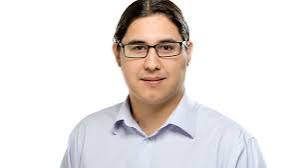
Tyler Sack is the Director of Research at the Deveau Institute for Indigenous Governance and Social Justice at St. Francis Xavier University. His work focuses on Indigenous governance, fisheries management, and community-led economic development, with an emphasis on collaborative approaches to environmental stewardship and climate resilience. Through partnerships with Indigenous communities, governments, academia, and industry, he advances governance models that strengthen Indigenous leadership and equitable participation in the blue economy.
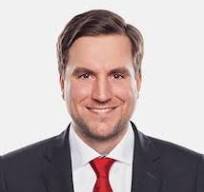
Dr. Christopher Bennett is a senior instructor in the Department of Leadership and Organizations and cross-appointed to the College of Sustainability at Dalhousie University. His research focuses on climate change, green transitions, and the governance of long-term societal challenges. He draws on insights from across the social sciences and applied ethics to study climate policy and the governance of emerging environmental technologies.
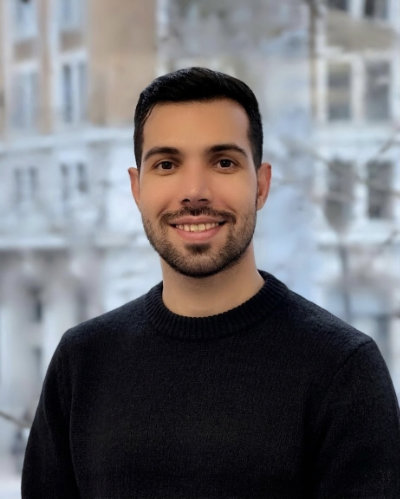
Nasir Tighsazzadeh is a PhD candidate in Resource and Environmental Management at Simon Fraser University with expertise in marine resource planning and management, stakeholder engagement, and socio-spatial analysis. His research focuses on the social dimensions of offshore renewable energy development in Nova Scotia, including Indigenous rights, governance, and equity, drawing on qualitative research with Indigenous and coastal communities to inform decision-making. Within the CONVERGE mCDR program, he contributes to the economics work stream, examining the mCDR value chain and how Indigenous participation, governance, and benefit-sharing can be built into the economic design of projects.
Tamara Joseph holds a Master of Marine Management from Dalhousie University and has expertise in marine conservation, Indigenous Knowledge, and community-based environmental research. She has experience working collaboratively with Indigenous communities on research, education, and community engagement, and is committed to advancing Two-Eyed Seeing approaches that strengthen decision-making. Within the CONVERGE mCDR program, she contributes to the Indigenous Knowledge and community engagement work streams, supporting the economic co-development of mCDR research by ensuring Indigenous rights, FPIC, governance, values, and perspectives are meaningfully incorporated into project planning, implementation, and long-term stewardship.