Paola holds an M.Sc. in oceanography with a focus on open ocean processes from Universidad de Las Palmas de Gran Canaria, supported by the Carolina Foundation. She earned her bachelor's degree in environmental engineering from Escuela Politécnica Nacional. Her experience spans ocean-atmosphere interactions, hydrometeorology, and climate forecasting. Paola’s research interests include climate change, ocean processes, ocean-climate modeling, and remote sensing. She aims to better understand the drivers behind oceanic and atmospheric patterns to improve forecasting accuracy. Through her work, Paola hopes to protect ecosystems, support vulnerable communities, and raise awareness about the environmental and societal impacts of a changing climate.
Paola is an oceanographer focused on open ocean processes, ocean-climate modeling, field work, and data processing. Her work aims to improve predictions of environmental conditions to protect ecosystems, support vulnerable communities, and raise awareness of climate-related impacts.
Camila Kneubl Andreussi is an oceanographer from Brazil. She holds an M.Sc. in oceanography from the Federal University of Santa Catarina. Her academic background focuses on marine plastic pollution, ocean literacy, and coastal dynamics. During her M.Sc. research, she utilized numerical particle tracking models to identify potential sources and trajectories of microplastics around a coastal island. She is a dedicated collaborator with the international NGO Parley for the Oceans, bridging the gap between scientific data and community-based conservation. With experience in island ecosystems—including a year living and working in Fernando de Noronha, an oceanic island that hosts a national marine park—she supported local diving operations and conservation efforts. Camila is passionate about the health of our oceans and communicating about it.
Camila Kneubl Andreussi is an oceanographer with an M.Sc. in oceanography, focusing on marine plastic pollution. She is dedicated to interdisciplinary oceanography that bridges land-sea interactions and ocean literacy to support coastal management. With experience in island ecosystems, she is passionate about ocean communication, finding joy in sharing the ocean’s significance to inspire its protection and long-term sustainability.
Gabriel Santiago Gutiérrez Cárdenas is an ocean scientist from Bogotá, Colombia, with an M.Sc. in marine resource management from Instituto Politécnico Nacional. His research focuses on ocean-atmosphere interactions, climate variability, and the biological impacts of physical processes like El Niño-Southern Oscillation (ENSO), marine heatwaves, and upwelling. Using data analysis, remote sensing, and statistical modeling tools such as Python, MATLAB, and R, Gabriel explores the regional dynamics of these phenomena. His award-winning thesis on ENSO diversity and upwelling systems reflects his commitment to scientific excellence. In 2025, Gabriel taught data analysis and visualization and supervised research at Universidad de Bogotá Jorge Tadeo Lozano.
Gabriel is an ocean scientist, with a focus on ocean-atmosphere interactions, climate variability, and upwelling. Gabriel uses data analysis, remote sensing, and modeling to study ocean dynamics and he currently teaches data analysis in Bogotá.
Tom is a master’s student in biodiversity and conservation biology at the University of the Western Cape, where he also earned his B.Sc. in 2022. His research uses high-resolution satellite data to study spatial and temporal patterns of coastal upwelling across major global systems. Tom contributed to the EXEBUS project, examining socio-ecological impacts of extreme ocean events on coastal communities. He participated in the 6th SEAmester program aboard the SA Agulhas II and later returned as a lecturer, teaching remote sensing and shipboard data integration. Tom actively participates in conferences and workshops in coastal oceanography.
Tom is a master’s student studying coastal upwelling across major global systems. He has experience teaching remote sensing and shipboard data integration for the SEAmester program and he actively participates in conference and workshops in coastal oceanography.

Brenda is a fisheries scientist and rising leader in Africa’s blue economy. She was trained at the University of Nairobi with a focus on marine biodiversity and conservation. As co-founder of Nutriee Fish, Brenda promotes circular blue food solutions to combat malnutrition and climate change. Her career spans government, research, and grassroots initiatives, including roles with Kenya’s Fisheries Department and the Aquaculture Business Development Program. At the Association of Women in Fisheries Blue Economy Kenya, she currently leads gender-inclusive programs empowering over 500 small-scale producers in East Africa. Brenda’s work blends ocean data, climate resilience, and local knowledge to reshape marine governance and embed African-led science in global ocean observation systems.
Brenda is a fisheries scientist and a rising leader in Africa’s blue economy. She advances gender-inclusive programs and champions African-led science in global ocean observation systems.
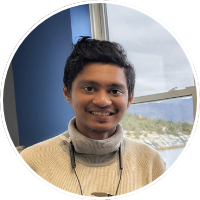
Rashed is an early-career oceanographer from Bangladesh, specializing in marine ecology, marine acoustics, remote sensing, and ocean modelling. He holds a B.Sc. and a M.Sc. in oceanography from Shahjalal University of Science and Technology. His M.Sc. research examined the impact of temperature on plankton dynamics. His other research includes estuarine fluctuations with tide, inland navigation impacts, offshore wind energy potential, and analysis of Acoustic Fish Profiler data. Through collaborations with government and non-profit organizations, Rashed has developed strong skills in fieldwork, project development, data analysis, and stakeholder engagement. Rashed was recognized as a 2024 NASA Space Apps Regional Champion for developing an ocean literacy platform. He also leads citizen science initiatives and received the TPSF Outreach Grant to conduct an ocean literacy workshop in coastal schools of Bangladesh.
Rashed is an oceanographer focused on marine and coastal ecology, marine acoustics, remote sensing, and ocean literacy. He is skilled in field research, data analysis, and stakeholder engagement, and he is currently involved with several citizen science initiatives.
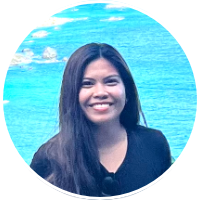
Joana Andrea C. Maningas is a marine biologist from the Philippines. She holds a M.Sc. in marine science from the University of the Philippines Diliman Marine Science Institute. Her thesis focused on coral communities in shallow hydrothermal vents of the Mabini Batangas reef in the Philippines. Her extensive experience and interests include coral ecology, coastal ecosystem assessments, and marine protected area management. Her recent work includes offshore coral reef assessments in the West Philippine Sea that can contribute to sustainable environmental practices and evidence-based policymaking supporting national and global conservation goals.
Joana Andrea C. Maningas is a marine biologist specializing in coral ecology and coastal ecosystems. Her research supports sustainable management and conservation, including recent coral reef assessments in the West Philippine Sea to inform environmental practices and policy.
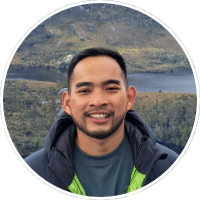
Julianto is a research assistant at Indonesia’s National Research and Innovation Agency, specializing in physical oceanography. He holds an M.Sc. in marine science and management from the University of New South Wales Sydney and a bachelor’s degree in oceanography from Bandung Institute of Technology. His research interests include upwelling, water masses, and remote sensing. Julianto began his career aboard the R.V. Baruna Jaya, gaining field experience in marine surveys and oceanographic instrumentation. He later transitioned into marine policy, crafting evidence-based briefs for Indonesia’s marine and fisheries sectors. His current work integrates oceanographic research with policy development to support sustainable marine governance in the Maritime Continent.
Julianto is an oceanographer focused on upwelling, remote sensing, and marine policy. With experience in field research and science-based policymaking, his current work integrates oceanographic research and policy development to support sustainable marine governance in the Maritime Continent.