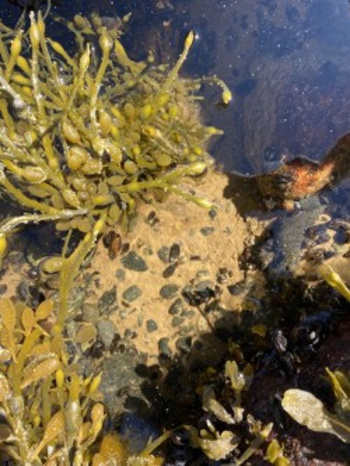
Kate Ortenzi was looking for a unique way to share her PhD research on the social, cultural, and ecological role of benthic species in Labrador Inuit communities. In collaboration with Inuit artist and animator James Jacque, an idea for an animated film, “Tinik, Suguset kanajugatsiujut (Low Tide, The Children are Looking for Young Sculpins)” started to take shape.
As part of her PhD research with the Sustainable Nunatsiavut Futures (SNF) project, which was supported thanks in part to funding from the Canada First Research Excellence Fund for the Safe and Sustainable Development of the Ocean Frontier research program, Ortenzi interviewed community members about their interactions with tide pools and benthic species as both children and adults.
“It’s one thing to publish a research paper with these stories,” says Ortenzi. “But it was important to me to convey them in a way that is accessible and meaningful, and to work with people from the region to make that happen.”
Ortenzi and Jacque wanted to create a sensical telling of the research gatherings with local themes incorporated—including themes of learning and independence—and tether that to real feelings and memories for locals.
“The film is intentional with its composition, perspectives, and animation style,” Jacque says.
“We felt the film should give credence to what is lived and known by this form of learning, living, and loving nature. This is confirmed by the feelings locals share when they view it.”
Funding for the film was provided by Crown-Indigenous Relations and Northern Affairs Canada, with in-kind support from the Nunatsiavut Research Centre. The film was also supported by the SNF project.
Engaging youth in ocean science
For Jacque, the film was an exciting opportunity to build skills both in animation and in communicating science concepts to youth.
“It’s good to get people interested in things like ocean science earlier in their lives,” Jacque says.
“Our hope was to make something that would start a conversation… so animation seemed the best way to do that.”
To make sure the film was easy for this audience to understand, Jacque engaged his children to provide creative input. They also provide the voices of the film’s human and benthic characters. The result is a charming, playful film that subtly balances Ortenzi’s research with elements of Inuit culture and knowledge.
“A lot of people have been surprised to see the story animated,” Jacque says. “There are different ways we can tell our stories and share our knowledge using the resources that are available to us.”
Sharing more stories and research
Jacque is interested in telling more of these stories—cultural and scientific—and he envisions building his own studio to produce traditional, cel-based animation. In the meantime, he and Ortenzi are looking at opportunities to show “Tinik, Suguset kanajugatsiujut” in Nunatsiavut schools, animation workshops, and film festivals.
Ortenzi hopes that these efforts to bring the film to a wider audience will encourage other researchers to think about how they can share their own findings in relevant and engaging ways. “This is important work, and it is fundamental to doing science in an ethical way,” she says.