Camila Andreussi was six years old when she saw the ocean for the first time. It was a family vacation and the experience proved so transformative for her and her parents that, when she was 15, they moved to a coastal island in Brazil.
“This changed everything for me,” Andreussi says.
“I was always so happy being in the ocean and now, being close to it all the time, I started thinking that I wanted to learn more so I could help my country protect it.”
Andreussi is making progress toward that goal through the Nippon Foundation-Partnership for Observation of the Global Ocean (POGO) Centre of Excellence (COE) in Observational Oceanography program. Hosted by OFI, in partnership with Dalhousie University, the Fisheries and Marine Institute of Memorial University, the Hakai Institute, and key curriculum delivery partner the International Ocean Institute-Canada, this 10-month program builds skills for championing ocean observation globally.
We caught up with Andreussi, one of eight scholars participating in the COE, to talk about her path to ocean research, her experience as a COE scholar, and the next steps as she prepares to graduate from the program.
How did your love of the ocean become an academic path?
When I was in high school, that’s when I heard about an entire degree program dedicated to the ocean called “Oceanography.” I thought, “That would be a good way to learn more about the ocean.”
I think the most interesting thing I’ve learned is how closely related the ocean is to everything on our planet—the atmosphere, the land, and us. It impacts our lives and we impact it, like marine plastic pollution. I started researching the impacts of that during my bachelor’s degree and continued during my master’s degree.
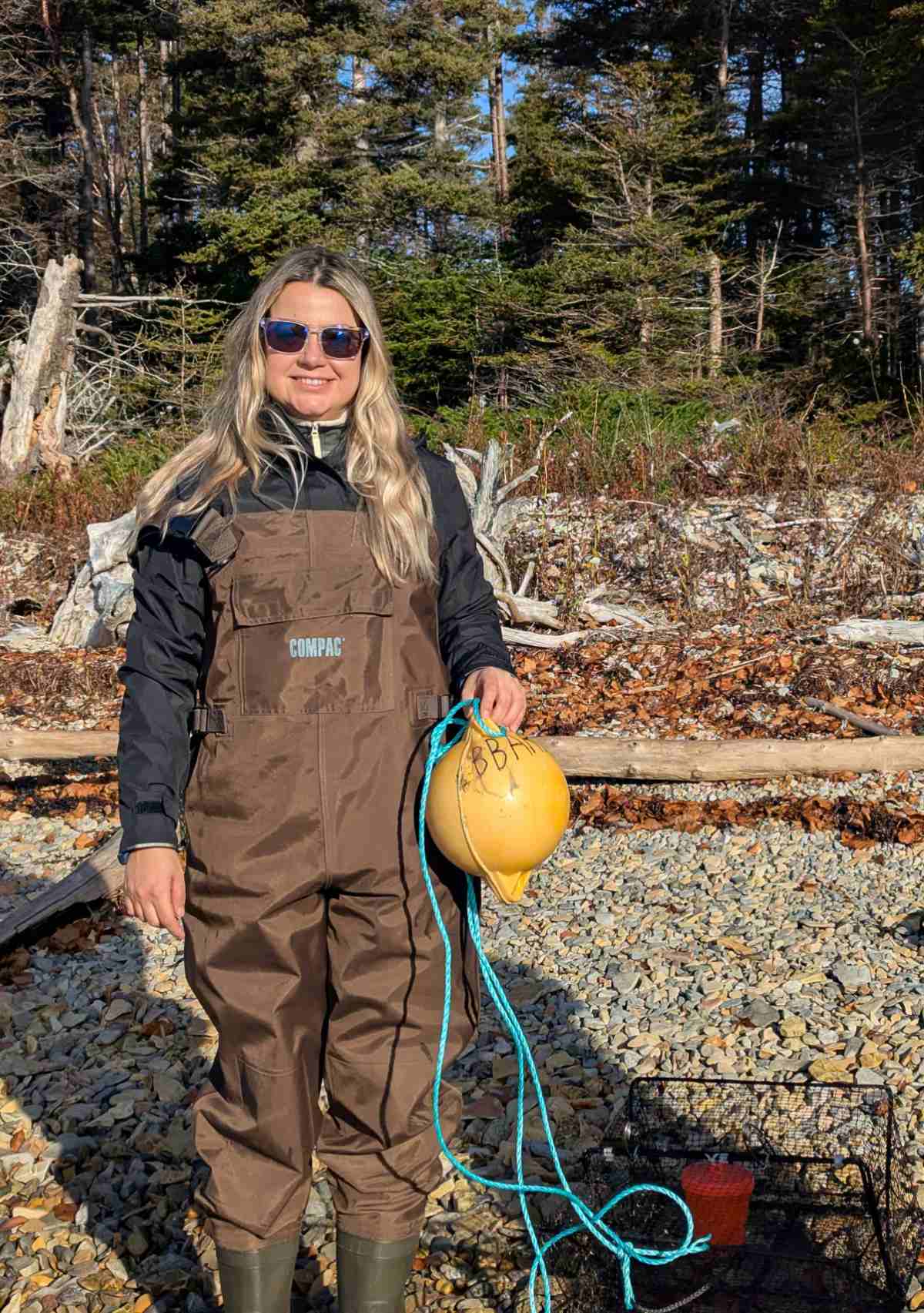
What was it about marine plastic pollution that interested you?
I’d heard about the Great Pacific Garbage Patch and realized it was a big problem. It opened my eyes to the plastic littering the beach where I live, and I told my family we needed to clean that up. We were there one day after a huge storm and there was more than we could collect. Much of it was not from Brazil; it was from far away. I wanted to know how and why it got there.
What inspired you to apply to the Nippon Foundation-POGO COE program?
It was the details about the program—what I could learn and the new technologies and equipment I would get to use. Some of these experiences were not available to me in Brazil, so it made sense to come to Canada, gain skills and knowledge, and take that back with me.
Tell us about your independent learning project. What are you studying and what have you discovered?
In my independent project, I'm looking at the impact of marine heatwaves on kelp forests in British Columbia. While my previous research has centred on marine plastic pollution, this study remains deeply connected to the broader challenge of climate change. I still get to focus on how our actions impact the health of the ocean and how we can protect it.
Kelp forests are a complex coastal ecosystem with critical three-dimensional habitats supporting immense biodiversity. In this study, I observed that high temperatures do indeed contribute to the decline in kelp forest area, especially in the summer (the period of peak kelp growth). However, in some areas, kelp forests have shown resilience, as evidenced by the recovery. This gives us hope for the future as we face climate change. At the same time, this further highlights the importance of conserving these areas to ensure the long-term health of our oceans.
How has your time been here at Dalhousie?
It’s been great, especially to hear from so many experts in ocean science. We had a lecture about plastics with a researcher who I’ve cited in my papers, which was a highlight for me. We have also been learning about the laws of the ocean, which are complex, highly specific, and relevant to the research I’m doing.
Has the opportunity to do this program with peers from around the world made a difference for you?
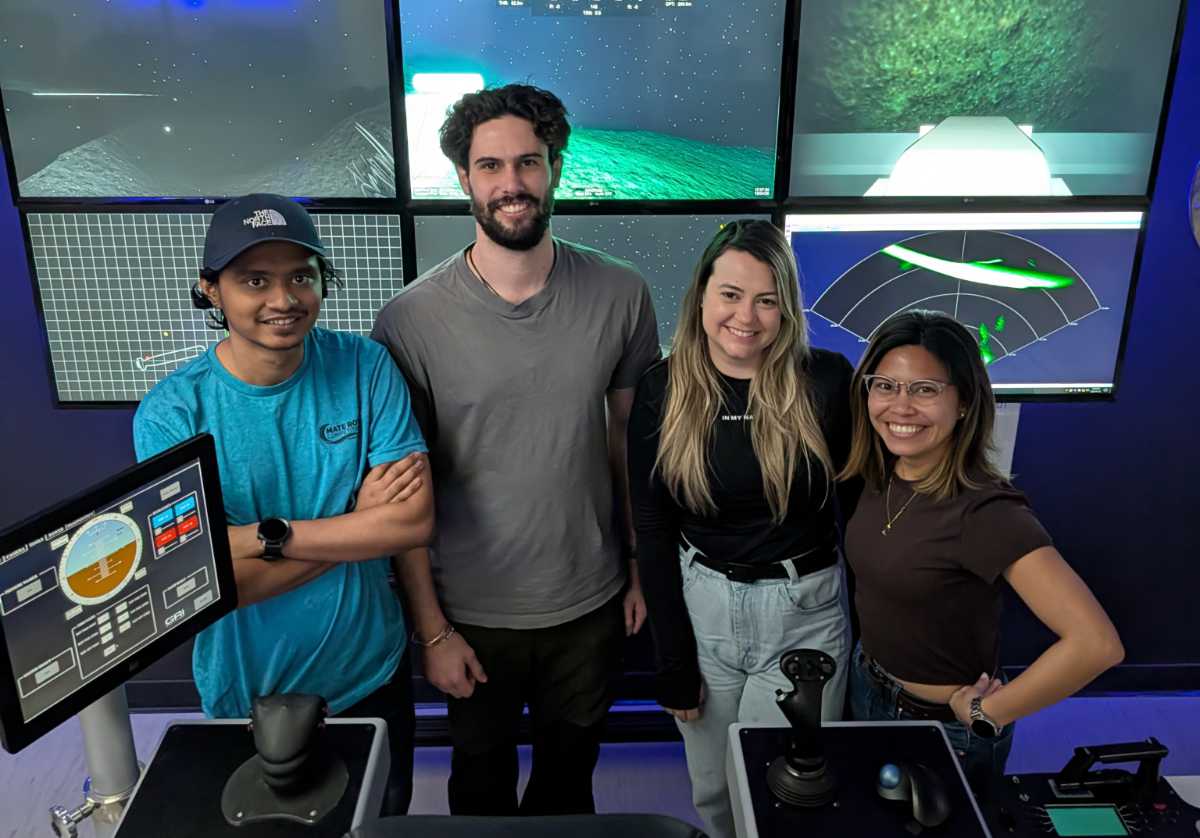
I couldn’t imagine doing this without them. I found that all of us are doing interesting work, and there have been opportunities for us to help each other in our research. That’s happened several times. For example, one of the scholars is an expert in physical oceanography, so I’ve been able to work with them.
What’s next for you and how will the COE program help you to achieve your goals?
I've gained a lot of new skills and strengthened the ones I already had. The program has broadened my perspective on the many ways I can contribute to ocean science. In particular, the science communication workshop inspired me to explore science communication as another meaningful way to make an impact alongside research.