Overview
Join us for an insightful seminar to learn how the Association for the Sciences of Limnology and Oceanography (ASLO) can be a vital partner in advancing your career in the aquatic sciences, especially for students and Early Career Professionals (ECRs).
A career in science demands continuous development in knowledge, skills, funding, and networking. ASLO, a volunteer-run international scientific society, offers a robust platform to support its members across all career stages.
In this session, you'll hear about the numerous resources and opportunities ASLO provides, including:
- Publications: The Limnology & Oceanography family of journals and how to publish and review for them.
- Conferences and ECR-specific programming.
- Opportunities for growth: Funding and support (e.g., internships, editorial fellowships, collaborative symposia, outreach).
- Recognition programs for member and community contributions.
- Ways to get involved with the society, which boasts roughly 2,800 members worldwide, with half being students/ECRs.
The seminar will be led by Rita Franco-Santos, a marine ecologist whose research focuses on the role of seaweeds in marine carbon sequestration. Rita is an active and engaged member of ASLO, currently serving as a Member-at-Large on the Board of Directors (as of July 2024). Her extensive involvement includes roles such as the Raelyn Cole Editorial Fellow, coordinating the L&O Letters Early Career Publication Honor, helping with the Eco-DAS symposium, and mentoring students in the ASLO Multicultural Program.
Don't miss this chance to discover how ASLO fosters a diverse, international scientific community dedicated to creating, integrating, and communicating knowledge across the full spectrum of aquatic sciences.
How to join
If joining remotely via teams:
Meeting ID: 266 080 391 301 5
Passcode: cY3NE29W
Biography
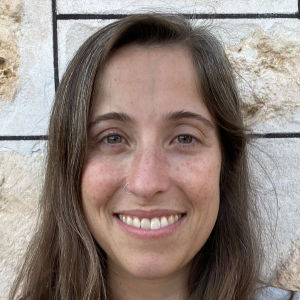
Rita Franco-Santos is a marine ecologist whose current research focuses on carbon pathways in kelp forests, more specifically on the fate and magnitude of kelp-derived carbon, and the potential for these ecosystems to contribute to carbon sequestration. While her expertise lies mostly in zooplankton (feeding) ecology, having worked with cephalopods, copepods, polychaete/urchin larvae, and krill in tropical, temperate, and polar regions, she applies her knowledge of isotopes and lipids as tracers for marine processes to any fields of interest. Rita is also highly involved in service roles, notably as co-coordinator of the Australian/New Zealand National Node of the UN Ocean Decade Early Career Ocean Professionals (ECOP) Programme and as a Member-at-Large in the Board of Directors of the Association for the Sciences of Limnology and Oceanography (ASLO).