À propos du projet
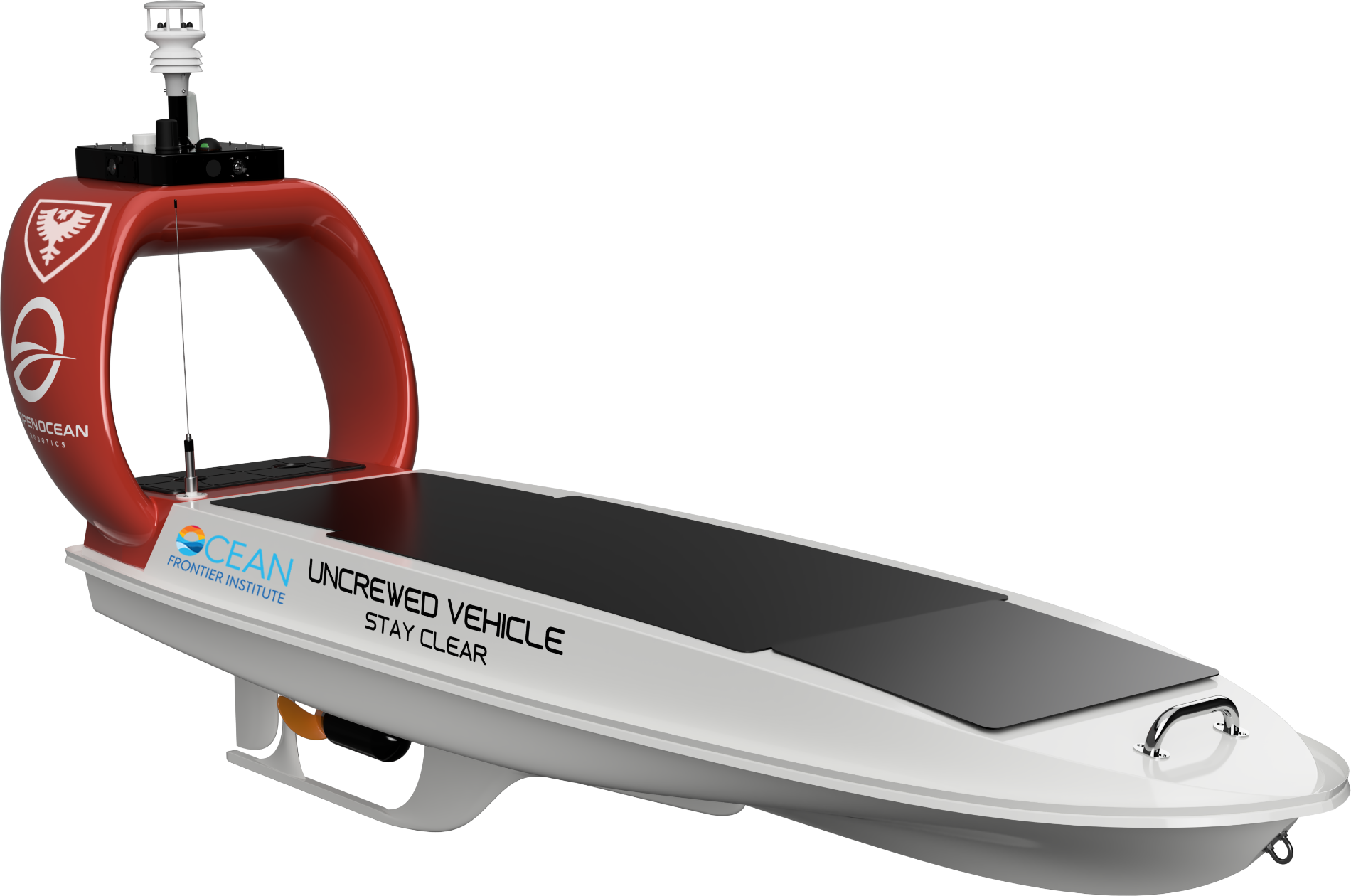

Alors que la réduction des émissions de carbone demeure la priorité absolue, l’élimination du carbone jouera également un rôle essentiel dans l’atteinte de la stratégie de carboneutralité. L’élimination du dioxyde de carbone en milieu marin (EDCm) pourrait potentiellement séquestrer des gigatonnes de dioxyde de carbone atmosphérique, de façon sécuritaire et responsable, permettant ainsi d’atteindre les objectifs de carboneutralité mondiaux. Toutefois, pour que l’EDCm réussisse, à des échelles climatiques pertinentes, il est nécessaire d’avoir en place des solutions de surveillance, de déclaration et de vérification (MRV), qui sont solides, crédibles et économiques.
SCALE MRV :
- S’entend d’un projet de recherche visant à effectuer des essais, à démontrer et à faire avancer la technologie échelonnable MRV pour l’EDCm.
- Accroître la crédibilité, l’échelonnabilité et l’efficacité économique de MRV en intégrant :
- Un véhicule de surface sans pilote (USV), avec un ensemble de capteurs vertical treuillé
- Technologie de détection atmosphérique et océanique de pointe
- Analyse de données par l’IA
- Modélisation numérique avancée
- Aide à faciliter la croissance future de l’EDCm, au-delà de sites d’essais régionaux et des pilotes
- Fait progresser la compréhension et l’utilisation de plateformes commerciales à coûts inférieurs et de capteurs, afin de parvenir à échelonner le secteur
Le défi : MRV échelonnable pour l’EDCm
Pour que l’EDCm soit viable à des échelles climatiques pertinentes, des solutions robustes, fiables et échelonnables de MRV sont essentielles.
Observations MRV actuelles
- S’appuient sur des processus de mesures océaniques traditionnelles et sur un personnel hautement qualifié pour exploiter et synthétiser les données.
- Les méthodes traditionnelles sont :
Bâtir l’avenir à l’aide d’innovations majeures
L’échelonnage MRV pour l’élimination à grande échelle de l’avenir exigera l’intégration entre de plateformes sans pilote avec des capteurs océaniques plus accessibles, une gestion avancée des données et des modèles numériques fiables. Les méthodes et les mesures propres à la recherche de norme devront évoluer et être adaptées afin de réaliser les observations et les modèles de l’avenir.
À l’aide d’un USV disponible sur le marché et équipé d’une surface modulaire et de capteurs de profilage verticaux, permettant la surveillance océanique adaptive, rentable et continue.
La combinaison de capteurs de norme, commerciaux, avec des outils de surveillance biogéochimiques de nouvelle génération, permettra d’informer le meilleur compromis entre le la technologie de mesures accessibles de captage par excellence de quantité inférieure et de quantité supérieure.
L’utilisation d’apprentissage machine visant à optimiser les stratégies d’échantillonnage océanique, à combler les lacunes observationnelles et à renforcer la précision du modèle MRV.
Le développement de modèles biogéochimiques et physiques de haute performance visant à évaluer l’apport de carbone l’efficacité de séquestration et d’orienter des stratégies optimales d’observation.
À l’aide des USV et de capteurs dans plusieurs locations, y compris des locations côtières et océaniques, parvenir à comprendre les limites technologiques, à valider les méthodologies MRV et à associer des modèles afin d’améliorer l’échelonnabilité MRV.
Alignement de la recherche : Transformer l’action pour le climat (TAC)
La recherche de TAC, 2e thème « Migration du changement climatique océanique » accorde une grande attention aux voies EDCm et aux méthodologies MRV. La recherche TAC et MRV échelonnable contribueront des données au Système intégré d’observation des océans du Canada (SIOOC) et cet échange de données ajoutera de la valeur aux deux initiatives de recherche.
Propulsion de l’innovation par l’entremise de partenariats
La collaboration entre les universitaires et l’industrie est essentielle afin de faire avancer la technologie océanique et d’accélérer l’utilisation de solutions MRV échelonnables.
L’OFI est fier de s’associer avec les leaders de l’industrie qui fournissent une expertise précieuse, des financements et des contributions en nature, visant à soutenir les efforts de recherche, l’intégration des systèmes, une directive opérationnelle et des analyses de données pour le projet SCALE MRV :


Par l’entremise de ces partenariats, nous encourageons les solutions climatiques fondées sur l’océan qui permettront d’atteindre un avenir durable et résilient au changement climatique.
Collaboration universitaire & données ouvertes : instaurer la confiance
La collaboration avec les universités est essentielle afin d’assurer la crédibilité et la responsabilisation des efforts d’EDCm. Les institutions académiques offrent une expertise indépendante, des méthodes scientifiques rigoureuses et un engagement envers la transparence, qui permettent d’atténuer les préoccupations concernant les préjugés de l’industrie. En rendant les données de capteurs accessibles au public en tant que données ouvertes, par l’entremise du Système intégré d’observation des océans du Canada (SIOOC), le présent projet conservera son intégrité scientifique, permettant aux autres recherchistes, aux responsables politiques, à l’industrie et au public, d’évaluer les constations par leurs propres moyens. De plus, les partenariats de l’OFI avec l’industrie fonctionnent selon notre philosophie de partenariat de recherche université-industrie bien établie, où nous sommes engagés envers le respect des plus hautes normes d’honnêteté, d’objectivité et de liberté académique. Cet engagement à demeurer ouvert, renforce la confiance, accélère l’innovation et assure que les solutions d’EDCm sont évaluées en se fondant sur des preuves.
Communiquer avec nous
Les membres d’équipe du projet de recherche SCALE MRV aimeraient communiquer et collaborer avec les collègues de l’industrie et de la recherche, afin d’œuvrer en direction des mêmes objectifs. Veuillez communiquer avec nous afin d’exprimer votre intérêt à collaborer relativement au présent projet, soit à titre de recherchiste, de capteur, de développeur/développeuse, de fournisseur d’EDCm ou à titre d’autre partenaire pertinent :
Faculté de l’informatique, Université Dalhousie