Growing up in southeast France, Manon Laget occasionally made trips with her family to the shores of the French Riviera. But the third-year Dalhousie postdoctorate fellow was relatively landlocked until she started her master degree in Marseille. She then made research trips during her PhD and two during her postdoc in the Labrador Sea.
“I think it came naturally to me,” says Laget of the experience.
“I liked it because it takes you back to the essentials. You focus on your work, and, at the end of the day, you have a whole community around you for socializing.”
Laget’s trips to the Labrador Sea were part of the Atlantic Zone Off-Shelf Monitoring Program/Atmosphere, Deep Ocean, Carbon Cycling and Sediment mission. She is investigating the role of plankton in biogeochemical cycles, specifically the biological carbon pump—the process by which marine organisms transfer atmospheric carbon to the bottom of the sea, where it can be stored for thousands of years until water circulation brings it back to the surface.
“I look at factors such as how these organisms produce, consume, and transform organic matter and their distribution,” explains Laget. “It is challenging because some of them are fragile organisms, so we use high-definition cameras to conduct sampling.”
Assessing phytoplankton bloom impacts
During her trips, Laget looked at the spring phytoplankton bloom, when the population of plankton at the ocean’s surface undergoes a rapid and significant growth due to increased light and warmer waters. She is particularly interested in one genus, Phaeocystis, which forms in large colonies during the bloom.
“The extent of their blooms has increased over time, which means shifts are potentially occurring in phytoplankton communities that will have impacts on the biological carbon pump,” she says.
“My goal is to understand what those impacts are.”
Laget says samples taken from the sea during her trips indicated that the spring blooms are dominated by colonies of Phaeocystis that degrade quickly and do not carry carbon deep into the ocean. This, she notes, has the potential to weaken the effectiveness of the biological carbon pump.
“There are phytoplankton groups like diatoms that produce larger and faster-sinking material, which can sink deeper in the ocean and stay there longer,” Laget says. “That is not the case with a bloom dominated by Phaeocystis, and that is a concern if we have longer and more frequent blooms of this species because they are usually less efficient in transporting carbon from the ocean’s surface.”
Driven by the unknown
Laget’s interest in these processes and their impact on ocean carbon storage reflects a lifelong passion for the environment, especially climate change. “When you consider the deep sea, there's still a lot about it that we need to know, and it's not that easy to observe,” Laget says. “Even with the technology we have now, we can only grasp a little of what is happening there. That means there is a lot to explore, which appeals to me.”
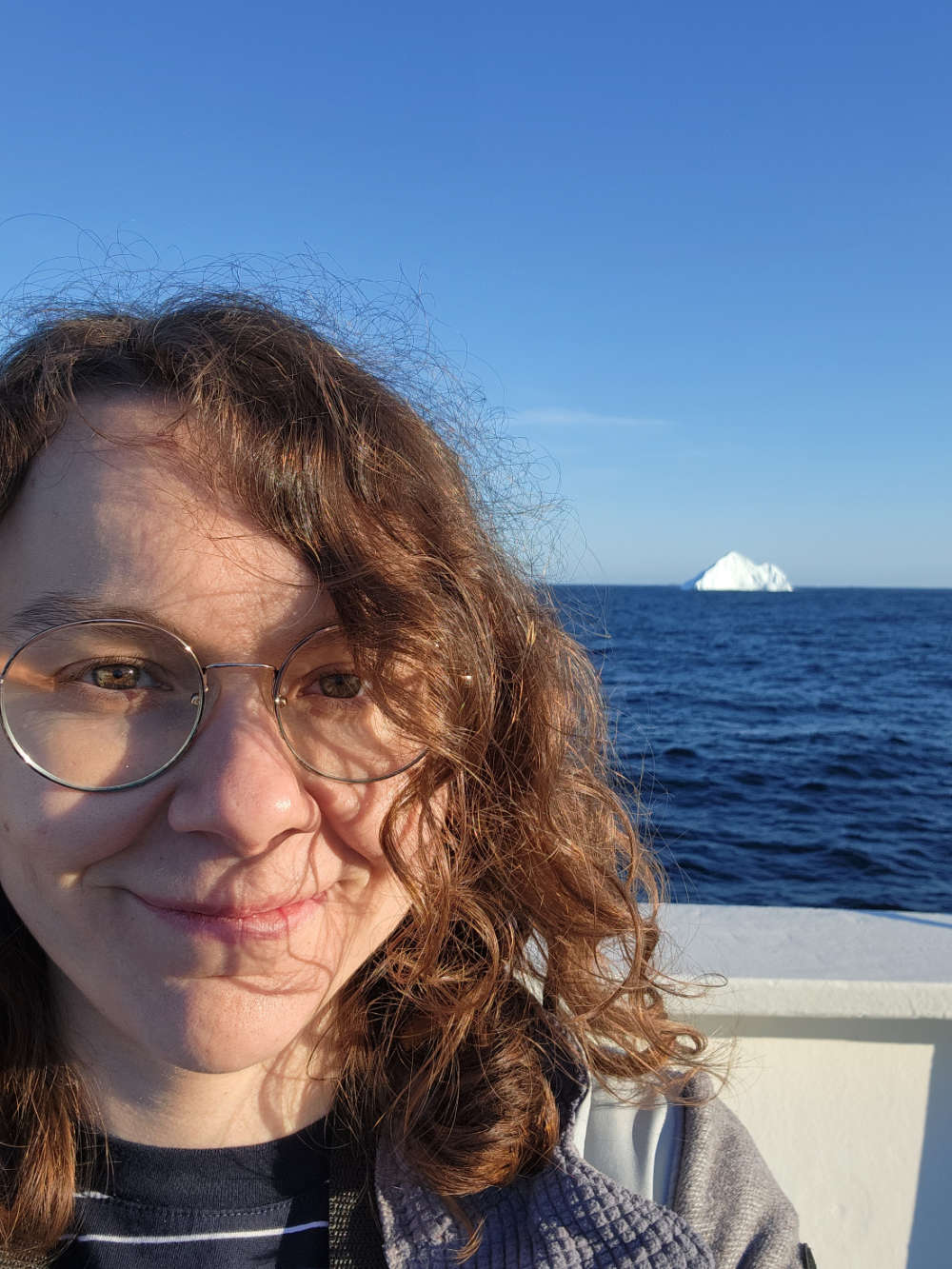
Laget will continue that exploration later this year through a research project supported by the Transforming Climate Action program. The project will use large datasets to develop models of Phaeocystis distribution throughout the North Atlantic and the Arctic.
“This will allow us to make future projections based on climate change data and assess whether there will be weakening or strengthening of the biological carbon pump,”
she says. “This knowledge will be vital not just for ecosystem management and environmental policies but will also serve carbon dioxide removal strategies.”