Brenda Wambui Wanjiku was at a crossroads. She had completed an undergraduate degree in fisheries but was undecided about what to do for her master’s degree.
“I remember thinking, ‘If I am going to spend the next decade of my life building a career in ocean science, I want to make decisions about that from a point of exposure,” recalls Wanjiku.
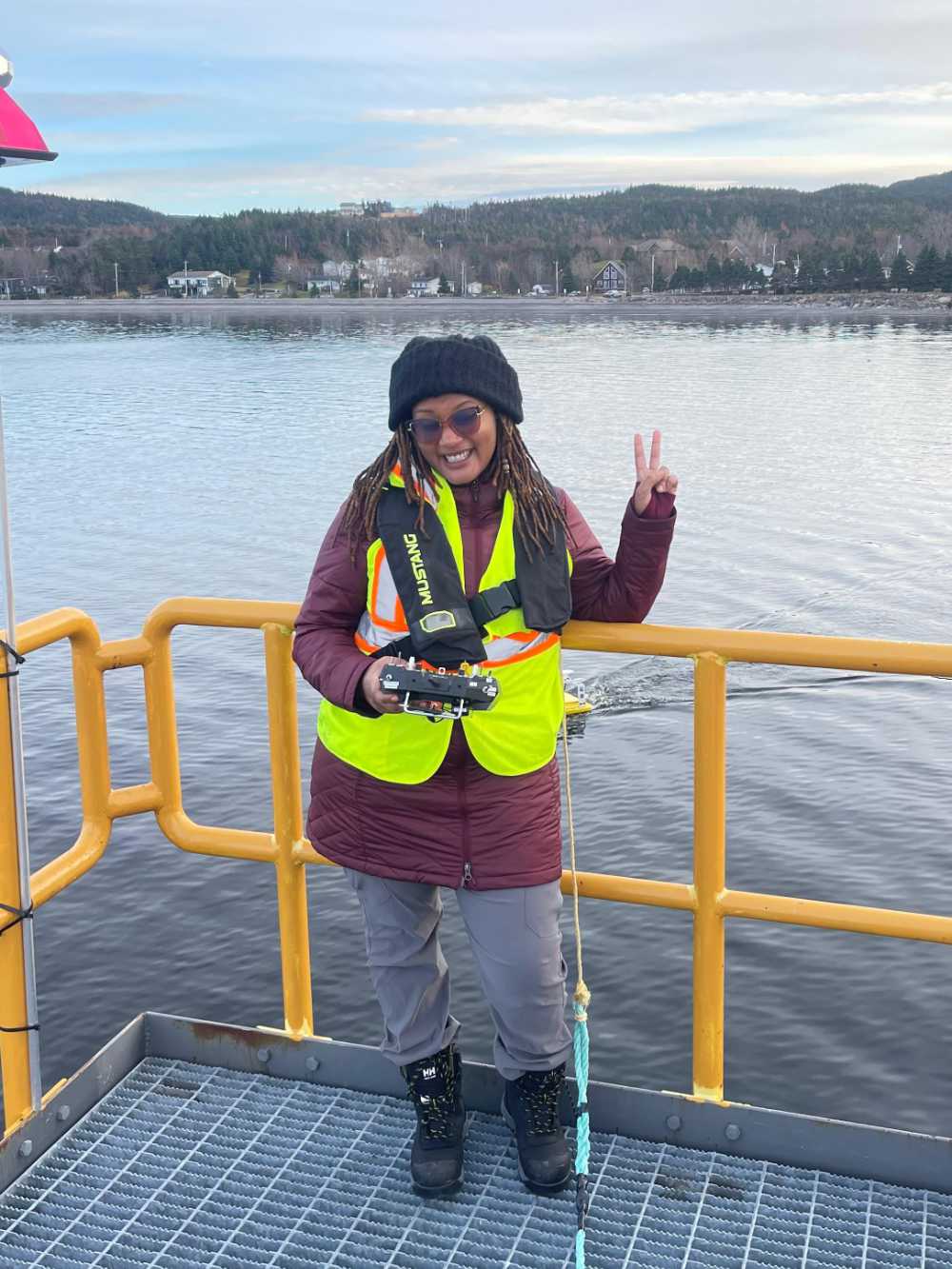
Wanjiku, who is from Kenya, found a solution through the Nippon Foundation-Partnership for Observation of the Global Ocean (NF-POGO) Centre of Excellence in Observational Oceanography (COE) program. Hosted by OFI, in partnership with Dalhousie University, the Fisheries and Marine Institute of Memorial University, the Hakai Institute, and key curriculum delivery partner the International Ocean Institute of Canada, this 10-month program builds skills for championing ocean observation globally.
“It offered the opportunity to experience different branches of ocean science,” says Wanjiku. That appealed to me, so I applied.”
A plankton “detective”
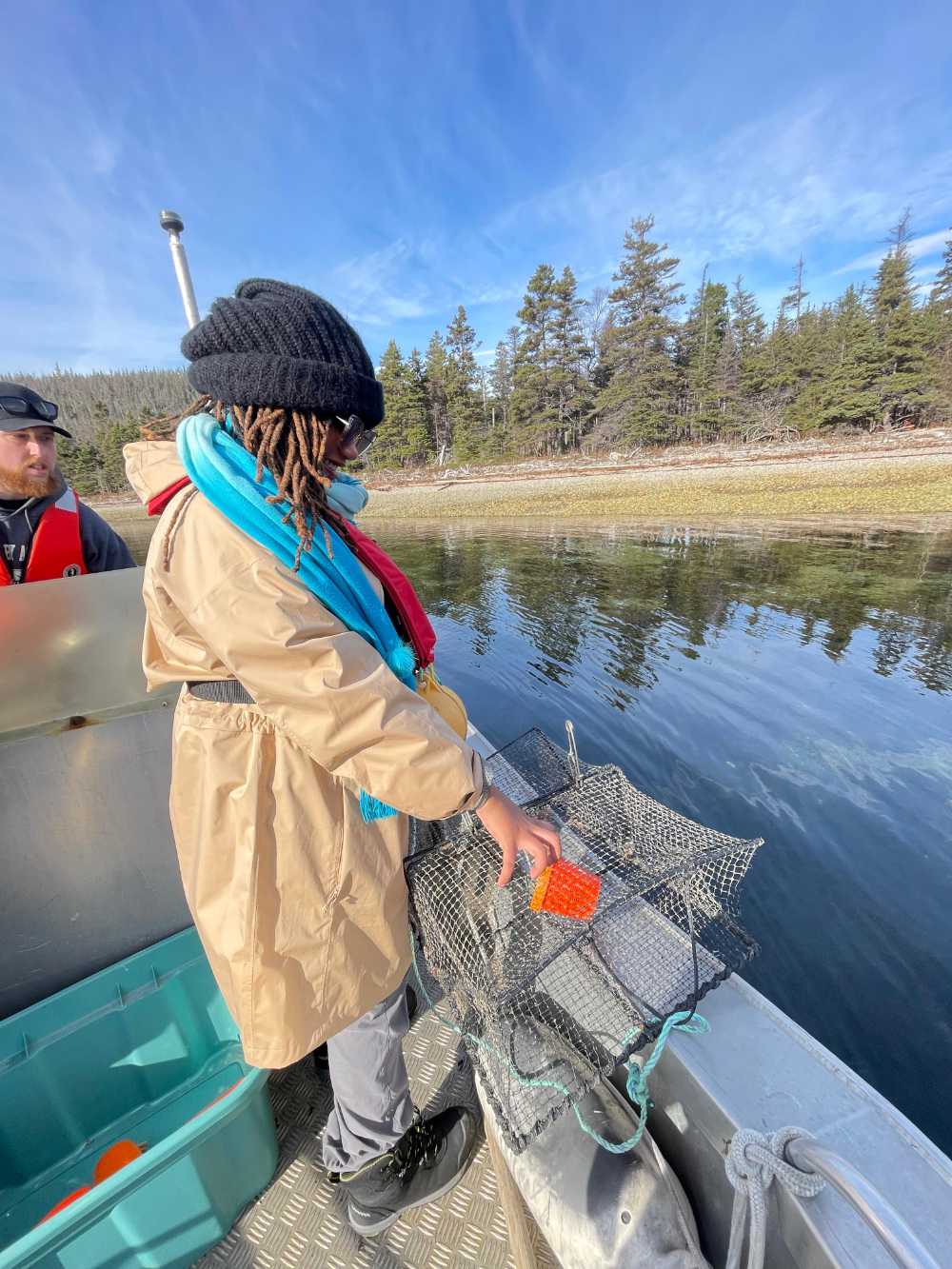
One of eight scholars who were accepted into the program’s 2025-26 cohort, Wanjiku says the experience has expanded her horizons. At the Fisheries and Marine Institute in Newfoundland, she explored ocean observing systems before shifting to environmental DNA and biodiversity monitoring during her time at the Hakai Institute in British Columbia. While there, she began an independent learning project focused on molecular genetics, specifically how different oceanographic factors such as salinity, temperature, and stratification impact plankton communities.
“I'm working with a really unique, long-term dataset,” Wanjiku says.
“It covers years of observations, meaning different seasons, water masses, and thousands of organisms that would be incredibly difficult to monitor using traditional methods alone.”
Wanjiku likens her work to that of a detective, albeit one who investigates whether plankton communities are changing and which factors, such as temperature and nutrients, influence the presence of particular organisms at different depths. The experience has been life changing for Wanjiku. For one, her interest in ocean science has shifted from fisheries and food systems to the marine ecosystems that underpin them. She has also gained more appreciation of and experience in the tools and data that lead to new insights on these ecosystems.
“If someone told me before this project that collecting data year after year was exciting, I probably wouldn’t have fully appreciated why,” Wanjiku says. “But when you look at data over multiple years, you begin to see patterns or shifts that you’d otherwise miss in a short-term study. That’s been amazing.”
Invaluable connections and perspectives
The program has been rewarding in other ways for Wanjiku. Since arriving at Dalhousie, she has explored topics such as ocean governance and gained new perspectives on ocean-related research and conservation.
“I’ve met so many people who are working on ocean issues, from researchers and policymakers to international organizations and Indigenous communities,” she says. “Those are opportunities that all of us in this program might not have had back in our home countries.”
Wanjiku also appreciates the connections she has forged with the other COE scholars, which have created a spirit of camaraderie while offering additional opportunities for learning.
“Each of us has unique abilities or skills that we bring to the table,” she says.
“There were so many moments when a conversation over lunch or during a field trip helped me understand a concept from a completely different perspective. That's one of the things that makes ocean science so exciting: no one has all the answers. Everyone brings a different piece of the puzzle.”
A vision for the future
As for Wanjiku, the puzzle of what’s next is starting to take shape. She is interested in a master’s degree in marine ecology and environmental DNA, with a focus on biodiversity monitoring and fish or plankton community ecology. She is also interested in exploring blue economy opportunities. Through these efforts, she hopes to contribute to ocean science while advancing sustainable food systems and support for communities that depend on the ocean. The skills, clarity, and connections she gained through the COE program will help make that possible.
“I now have a community of people working across different areas of ocean science that I can continue learning from and collaborating with in the future,”
she says. “That's the biggest thing I’ll be taking home.”