Overview
Marine Social Science is quite an established field of research. If we would use the MARE People and the Sea conferences as an indicator we see a gradual growth of the community and its output. The majority of the researchers work at universities, teach, perform research and write lots of articles and preferably monographs and (thick) books. Thus there is a whole lot of marine social science knowledge out there, but does it make a difference? Increasingly the world’s seas and oceans are used more intensively by a more diverse group of users and studied with ever so much more scrutiny. Fisheries and their impacts are observed under magnifying glasses with increasingly less ocean space for them to use. Whilst this is ongoing, interest for applied marine social science in the European context is growing. The EU’s directorate general for the seas and oceans (DGMARE) is interested in the ‘social dimension’ of its policy and the intergovernmental marine science organization ICES initiated the ‘strategic initiative on the human dimension’ some years ago. In my talk I will sketch these ongoing developments, give some examples of the applied social science work I have been engaged in with my colleagues in the Netherlands & Europe and discuss the question: how can we (marine social scientists) as soon as possible become as relevant as possible so that we can make a difference before it is too late?
Speaker
Discussants
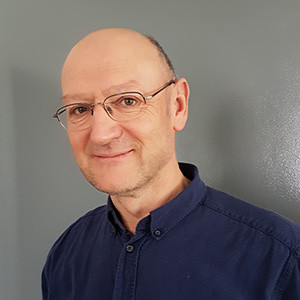
Marloes Kraan is a marine social scientist, working as a researcher at the applied research institute Wageningen Economic Research, and at the Environmental Policy Group (ENP) at Wageningen University. She is co-director of the Centre for Maritime Research (MARE) in Amsterdam, member of the Strategic Initiative on the Human Dimension (SIHD) in ICES and co-chair of the Working Group on Social Indicators (WGSOCIAL). Marloes is interested in contributing to increasing inter- or transdisciplinarity in maritime research, interactive fisheries governance and improving the applicability of social science in fisheries science and policy.
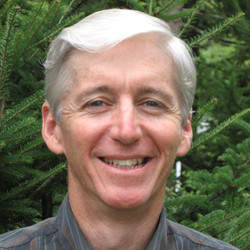
Professor Jahn Petter Johnsen works at the Norwegian College of Fishery Science at UiT, the Arctic University of Norway. Johnsen has since 2006 had his research focus on fisheries and aquaculture management and organization, and processes of change in marine industries and marine communities in the North Atlantic. Johnsen has experience from professional work in the fishing industry.
Dr. Rob Stephenson is a Research Scientist with the Canadian Department of Fisheries and Oceans, and Visiting Research Professor at the University of New Brunswick. From 2010-2016 he was Principal Investigator of the Canadian Fisheries Research Network that linked academics, industry and government in collaborative fisheries research across Canada. Current research interests include development of strategies, and governance for full-spectrum sustainability of marine activities including the integration of ecological, economic, social/cultural and institutional aspects of management.